When there is a letting go of grasping, searching and complicating life, then contentment can be uncovered. Following the next “high” can only go so far. Whether it’s possessions, substances, others or any object of desire, searching outside oneself for happiness tends to lead to more suffering instead. Then there is the practice of contentment (Santosha) in any situation. Staying with rather than running to the usual distractions. Coming back to oneself instead of searching. Realizing that the answer for you will not be found “out there.”
What makes us discontented with our condition is the absurdly exaggerated idea we have of the happiness of others.
French Proverb
Home Sweet Home
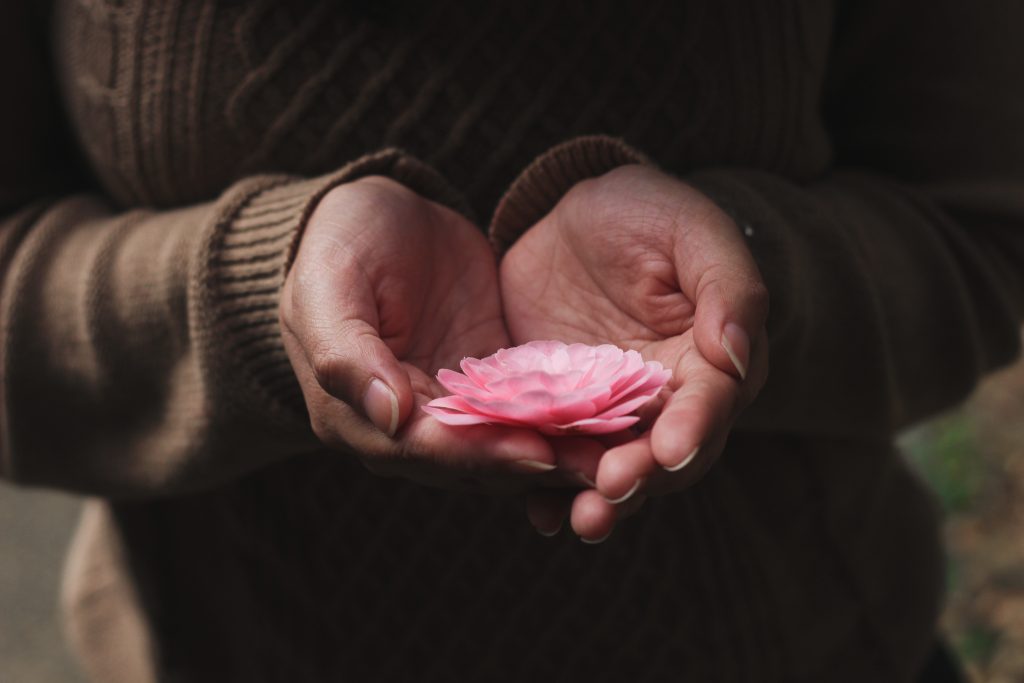
Within you is a peaceful place that can be found no matter what chaos is spinning around it. There is no need to follow every external pull. You can of course, if you so choose, but you will always end up back where you started… with you.
Sit with yourself. Distill everything down to this moment and see what you find. Give yourself a break from the endless struggle to be happy. Just be.
You have all you need and my words won’t get you there, but perhaps they point to something you thought you were looking for. Feel free to connect. I’m practicing too. alissa@kushalayoga.com
The first of the Niyamas, Saucha, lends itself to a myriad of explorations (I suppose everything does). The paradoxical nature of that statement is that Saucha can be seen as simplicity. Often described as cleanliness, such as hygiene (or Kriyas), there is definitely a deeper aspect to the purity to be discovered through this Niyama.
I find it intriguing that this first Niyama of simplicity follows the last Yama of Abundance (or Non-Grasping). When realizing abundance, there can be a clearing of clutter, a way of simplifying life. It makes sense to me to practice non-grasping and/or realizing abundance that is already available and then (or at the same time) clean house, remove clutter and simplify. It could be tricky to clear clutter or let go without the realization of abundance or awareness of the suffering that can come from grasping. When practicing or experiencing simplicity, each moment, object or person can be truly experienced without the diluting that comes from cluttering up space (physical or mental) with many other distractions.
Purity
Nischala Joy Devi, in her book, The Secret Power of Yoga defines Saucha in these ways…
Through simplicity and continual refinement the body, thoughts and emotions become clear refections of the Self within.
Reveals our joyful nature and the yearning for knowing the Self blossoms.
To be emotionally light and see the humour in life.
The word purity can lead us to think of many restrictions or perhaps an impossible endeavour to be perfect in some way. A simple definition of “the absence of contaminants” can point there as well. Remembering that it is a practice (as all yoga is) and that thoughts of all kinds will arise and become more clutter if allowed, one can sift through what is supportive or not and remember all the Yamas that came before.
Where can you begin to simplify and see yourself beneath the distractions that life seems to so easily afford? For those in the challenge (or anyone), play with this for the next week and feel free to share.
I’ve been clearing some clutter myself in my physical and mental space. Cleaning up what I eat has often been my go-to. Focusing more on what I let occupy my thoughts and clutter my living space is where I’m going with this now. I’m always happy to connect and support in the practice of yoga. It’s definitely a practice and we’re all in this together. alissa@kushalayoga.com
Otherwise know as the Niyamas or the second limb of yoga. The Niyamas are a good way to get to know yourself better and deepen or further your practice. As with the Yamas, there are five, but the Niyamas are in some ways more internally focused while the Yamas are more externally focused.
Challenge Yourself
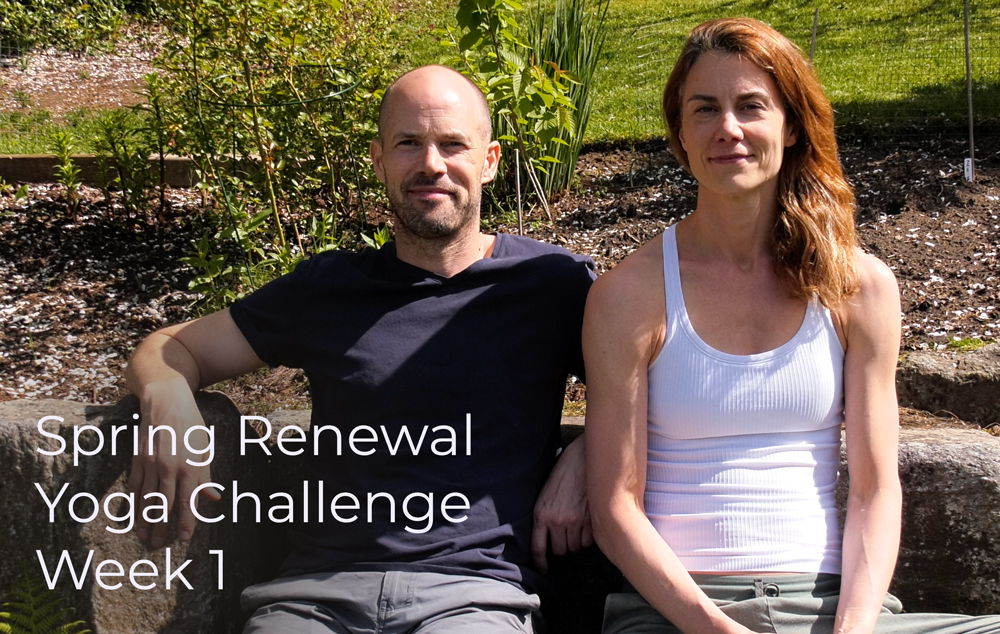
The Niyamas (and any practice) can be a challenge. Since the challenge starts tomorrow and it is a choose your own challenge style this year, I’ll be offering the Niyamas throughout the month of May as something to consider while practicing. I’ll be bringing them into my own practice and challenge you to consider at least one of the Yamas or Niyamas during the challenge. Here’s a brief description of the five Niyamas…
My name is Jordan Birch. I am a nature connected Life Coach and founder of Get Out Of Doors Life Coaching. Your positive experiences in nature are a channel for self discovery and a platform that awaits you to create and live the life you truly want to live.
Step outside. Walk beside me. Out here in nature you will heal, grow, and evolve. You will get unstuck. Now is the time to stop doing what you’ve always done and get what you’ve always gotten. Breakthrough with me.
I have a tool designed to create breakthroughs that can transform your life, as they have mine. I have developed a unique, step-by-step life coaching program that empowers you to eliminate what’s not working in your life so you can uncover the best of who you truly are.
Are you ready to break free from what’s not working in your life? Do something different. choose a different path – one that will lead you to where you know you are meant to be.
Out here I deliver guided walks inspired by relevant, experiential activities in natural areas, to deepen your transformation. My life coach approach creates opportunities for you to harness the most positive and insightful experiences we all have in nature.
I invite you to step outside and take a walk with me. Now is the time.
Jordan Birch CPC, ACC MSc.
Life Coach
Jordan Birch is a Certified Professional Life Coach living and working in greater Vancouver. His passions drive him to empower you to eliminate self-destructive and limiting behaviors so you can breakthrough insanity—doing the same things over and over again and expecting different results. In his private practice ‘Get Out Of Doors’ he fuses transformational Life Coaching and a partnership with nature as a metaphor and medium for change.
Days are getting longer and warmer. Flowers are blooming. Birds are singing. There are new beginnings and rebirth in nature. It seems like a celebration in some way. Inviting the sun or saluting it like we do in yoga ;)
Spring is nature’s way of saying, “Let’s party!” ~Robin Williams
You may be getting the sense of this for yourself as well. Spring cleaning. Peeling off the layers of winter. Starting something new. If you’re feeling the urge to start gardening (literally or figuratively), why not start with planting some Gratitude?
Yama Revisited
The last Yama I wrote about was Aparigraha. I wanted to revisit it before going on to the Niyamas (next blog). The idea behind Aparigraha is that of non-grasping or abundance. I wrote of practicing gratitude for the abundance that can be found on the mat and in life. Did you happen to give it a try or consider what you’re grateful for?
What Are You Grateful For?
I won’t be the first to suggest that you make a list. Make one per day or per week. Let thank you become your mantra. Repeat it over and over throughout the day when you notice something to be grateful for or simply to remind yourself.
If the only prayer you ever say in your entire life is thank you, it will be enough
~Meister Eckhart
Gratitude Garden
The sound of that brings to mind a very beautiful garden that would continue to inspire gratitude. Let’s start planting gratitude and see what comes up. The weeding comes in noticing the thoughts of lack or grasping and replacing them when possible. Simply noticing them and how they make you feel can be a way of making a shift. Plant gratitude anywhere and everywhere. There’s always something to be grateful for. Keep it simple at first and feel free to share. Thank you in advance for the beauty you will create (or already are creating).
Some of you may recognize Zamir Dhanji as the mystical musician who graced savasana with the haunting earthy tones of his hang drum or flute. Zamir is also a Lead Faciliator of Teen Journey, a Vancouver based non-profit organization created to empower youth with a vision of interconnectedness, as members of a global village that live from the heart with passion and purpose. Founded on the established research and time-tested practices blending indigenous wisdom with the human potential movement, Teen Journey is a transformational program for youth in search of inner guidance. Led by local and international leaders in the fields of arts, science, and personal development, Teen Journey participants learn the value of self-inquiry as a means to change themselves and the world around them.
Teen Journey Presents: Peru: A Cultural Exchange for a Great Awakening
On an initiatory journey to the land of Incas, youth will interact with a culture of ancient warriors and hunters who will share their ancestral ways in their majestic native habitat. By taking this trip, youth are not going to be treated as a tourist seeking superficial experiences. This a a mystical journey into the heart of what it means to be human, guided by leaders of who are committed to their rites of passage.
On this journey, youth will be challenged to become leaders of their homes, their communities and their planet. Because leadership starts within, the experiences on this journey will develop confidence, courage, open-mindedness, and the ability to work with others.
The winter season is the typical time for colds and flu’s. The immune system is the body’s natural mechanism for fighting against invaders such as viruses and bacteria. Some strategies for supporting your immune system this season are:
Reduce Exposure to Viruses – Washing your hands regularly and/or keep a natural hand sanitizer in your bag or at your desk that can be used prior to eating.
Healthy Diet – Eat plenty of fruits and vegetables, which are great antioxidants and immune builders. Some that are particularly effective are leafy greens (spinach, kale, Swiss Chard, broccoli), any colorful vegetables from yellow, orange, red to purple will all provide different vitamins and minerals that will fight off those viruses.
Good night sleep – Lack of sleep depresses the immune system and lowers immune boosting T-cells and increases inflammatory cytokines. A good night sleep is sometimes all it takes to get rid of a cold.
Avoid Sugar – Sugar will depress your immune system for at least 2-4 hours after eating it. Try minimizing the amount of sugar/treats that you consume, alcohol included.
Vitamin C – ensure a daily dose of Vitamin C either through supplements or foods high in Vitamin C like leafy greens (kale and Swiss chard), kiwi, peppers, strawberries, oranges and broccoli to name a few.
Botanical herbs – One of my favorite immune boosting herbs is Astragalus. It is a deep immune activator and enhancer. It also has both antibacterial and antiviral properties but is best used as a preventative rather than for acute cold/flu. There are also many herbs that are very effective for acute cold/flu, coughs, congestion, and swollen glands. Speak to your local Naturopathic Doctor to find the best ones for you.
Figuratively speaking, have you ever made a heaven of hell or a hell of heaven? For instance, have you ever filled your hour-long yoga practice with worry, self-criticism, frustration or other harsh undertones? On the flip side, have you been in an extremely challenging-for-you posture and decided not to fight it, but to experience breath and sensations as proof of life? This can be especially “heavenly” if your typical response is to swear under your breath at the teacher for holding you in “hell” so long ;)
Meaning Making
What meaning do you give to being able to hold steady in a balance posture? To keeping your mind quiet in Savasana? To the teacher suggesting Plank for longer than you’d like? If being able to hold Tree Pose perfectly steady for 30 seconds to a minute means you’re doing it “right” then every time you don’t, you’ll see yourself as doing it “wrong.” If a busy mind in Savasana means you “can’t meditate,” you may give up when you notice you’ve wandered rather than making your way back. If the teacher suggests Plank Pose and you think, “$#*@!”, you may end up disliking one or both of them and perhaps even deciding you’re “not strong enough.” There are many other meanings that can be made up on your mat from any posture, thought, sensation, comparison or combination of all. There of course are meanings made of being “better” than someone next to you or being “good at yoga” when you feel you’ve mastered a posture. Whether they seem “good” or “bad”, meanings can trap you into certain perspectives that you may end up playing out over and over again.
“Man is born free, and everywhere he is in chains. ~Jean-Jacques Rousseau
Check in on the meanings you’re making off your mat as well. When life isn’t flowing smoothly, your mind is racing and you’re being challenged to no end, you can choose to see it as hell or a definition of who you are if you wish. Other options may include seeing times like these as temporary set-backs or opportunities to slow down. Seeing it as an experience you’re going through is another choice. There are actually endless choices for meaning in any situation. The lyrics below remind me of this.
And when the rain falls down you know the flower’s gonna bloom. And when the hard times come you know the teacher’s in the room. ~Michael Franti, “Have a Little Faith”
Make Art
Whatever seems to happen to you in life, you are the artist. You decide what it means for you or what you make of it. Your yoga practice can be a work of art even if you fall on your asana every time you attempt to balance. Your meditation practice can be a harmony of thoughts and silence. Plank Pose can be an exploration of the colours and sounds you can create and the teacher is there with you through the challenge, offering options and support. Your whole practice can be beautiful. It may simply be hiding under the tension created by “trying to get it right.”
As usual, the practice on your mat radiates out into your life and vice versa. The toughest situation you’ve encountered can become your greatest masterpiece. Hell can become a heaven if you so choose. How much work that takes is also up to you. Someone’s opinion of you can be a defining factor or simply their opinion. Even your own opinion of yourself can be rearranged. The “teacher in the room” during struggles (on and off the mat) can be the struggle itself, the other/s involved, yourself, all of it. You can choose to see any “teachers” as angels or devils, as causing your struggle or being there to support your growth. Oh, the duality!